MATERIALS: A can Cooking tongs A camping stove A bowl with cold water INSTRUCTIONS: - Put some water in the can (a tablespoon). - Place the can on the stove. - Heat the can to boil water. You can see the water vapor rising from the can. Wait one minute. - Hold the can with the tongs. - Take the can, turn it upside down very quicky and dip it into the water in the bowl, so the hole is covered by water. - The can crushes. - We did the same, but we placed it on the water with the open on the top: it happened nothing. WHY?: By boiling the water, the water changes states from a liquid to a gas (vapor). The water vapor expands and pushes the air out of the can into the atmosphere. When we turn the can upside down and place in the water, the water vapor cools, condenses, contracts and the pressure in the can decreases. Then the pressure from the outside of the can (atmospheric pressure) is higher, pushes the can and crushes it . When we do the experiment with the opening on the top, the air from the outside goes in the can and the pressure in and out the can is balanced.

dimarts, 24 de maig del 2011

dimarts, 5 d’abril del 2011
Bottled eggs-periment
MATERIALS:
- A peeled boiled egg.
- A glass bottle with an opening a little bit smaller than the egg.
- A newspaper.
- A lighter.
INSTRUCTIONS:
- Put some pieces of newspaper into the bottle.
- Light a piece of paper and put it into the bottle to burn the pieces of newspaper.
- Wet the egg and place it in the bottle opening.
- The egg will slowly move into the bottle.
WHY?:
Hot air expands and cold air contracts. When you heat the air in the bottle, the molecules inside the bottle spread out and the air pressure is increased. When the air in the bottle cools, the air pressure decreases. Then the outside air pressure is higher than the pressure in the bottle, and pushes the egg into the bottle.
WHAT DO YOU THINK ABOUT IT? WRITE YOUR OPINION.
dimarts, 8 de març del 2011
Lung capacity
Lung capacity on PhotoPeach
MATERIALS:
- A tank
- A tube
- A bottle
INSTRUCTIONS:
- Fill the tank and the bottle with water.
- Put the bottle upside down in the tank.
- Put the tube in the bottle.
- Fill your lungs with as much air as you can.
- Blow through the tube.
- Measure how many liters you have blown.
WHY?:
The air you blow through the tube expels the water in. The place were once there was water now there is air. You can measure the air you blow looking at the level of water in the bottle.
WHAT DO YOU THINK ABOUT IT? WRITE YOUR COMMENTS.
dimarts, 8 de febrer del 2011
Fatty foods
Fatty foods on PhotoPeach
MATERIALS:
Brown grocery paper, cut into small squares.- Rub each piece of food onto separate paper squares. Count to 20 while you rub, so that you test each food for the same amount of time.
- Label the squares so you remember which food you rubbed on each one.
- Put the papers in order from the most stained to the less.
- Leave them a week (an overnight is enough).
- After a week, put the papers in order again. You'll see that the order is different now.
WHY:
Fat stains the paper while other liquid substances (mostly water) evaporate.
WHAT DO YOU THINK ABOUT IT? WRITE YOUR COMMENTS.
dilluns, 20 de desembre del 2010
International Year of Chemistry: a workshop.

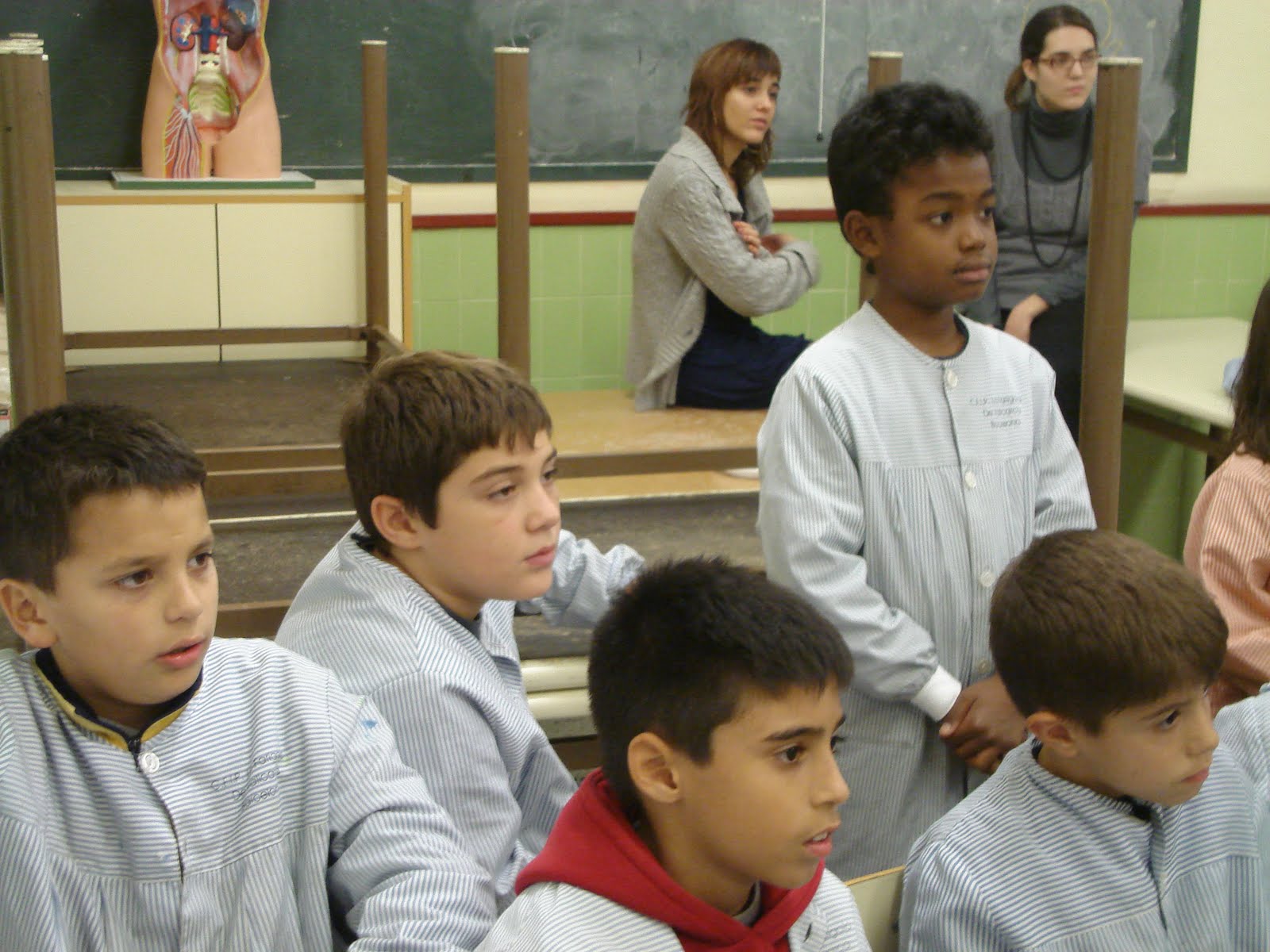


Josep's mum, Núria , is a chemist. She came to school and did lots of experiments to us: a battery with a lemon, small pieces of paper that showed if a liquid was acid or basic, liquids that changed colour when adding some drops of another liquid... We thought they were magic!

When she finished we asked her many questions.
WHAT DO YOU THINK ABOUT IT? WRITE YOUR COMMENTS!
International Year of Chemistry: no fire for a fried egg


MATERIALS:
- An egg.
- A plate or a bowl.
- Alcohol.
INSTRUCTIONS:
- Break the egg and put it in the plate.
- Pour some alcohol on it.
- Wait half an hour.
- It's a fried egg!
WHY?
Eggs contain proteins. When you heat proteins they undergo a structural change called denaturation. You can get the same result with alcohol. In this process the egg white becomes solid and white.
WHAT DO YOU THINK ABOUT IT? WRITE YOUR COMMENTS!
International Year of Chemistry: the balloon


MATERIALS:
- A bottle.- A balloon.
- Vinegar.
- Sodium bicarbonate.
- A funnel.
INSTRUCTIONS:
- Fill half of the bottle with vinegar.
- Fill the balloon with sodium bicarbonate. Use the funnel.
- Adjust the balloon to the bottle.
- Pour the bicarbonate to the vinegar.
- The balloon starts to blow up.
WHY?
When bicarbonate mixes with vinegar (an acid) it produces carbon dioxide. This is the gas that blows the balloon up.
WHAT DO YOU THIN ABOUT IT? WRITE YOUR COMMENTS!
International Year of Chemistry: Physical or Chemical change?


MATERIALS:
- 2 plates
- 2 sheets of paper
- a lighter
INSTRUCTIONS:
- Make a ball with one of the sheets and place it on a plate.
- Fold the second sheet of paper, place it on the plate and burn it.
- The first sheet has suffered a physical change, and the second one a chemical change.
WHY?
The first sheet of paper is still paper, it keeps its properties. It has only changed its shape and size: it's a physical change.
The second sheet of paper isn't paper any more. Now it's something different, it's ash: it's a chemical change.
WHAT DO YOU THINK ABUOT IT? WRITE YOUR COMMENTS!
dimecres, 17 de novembre del 2010
Building bridges

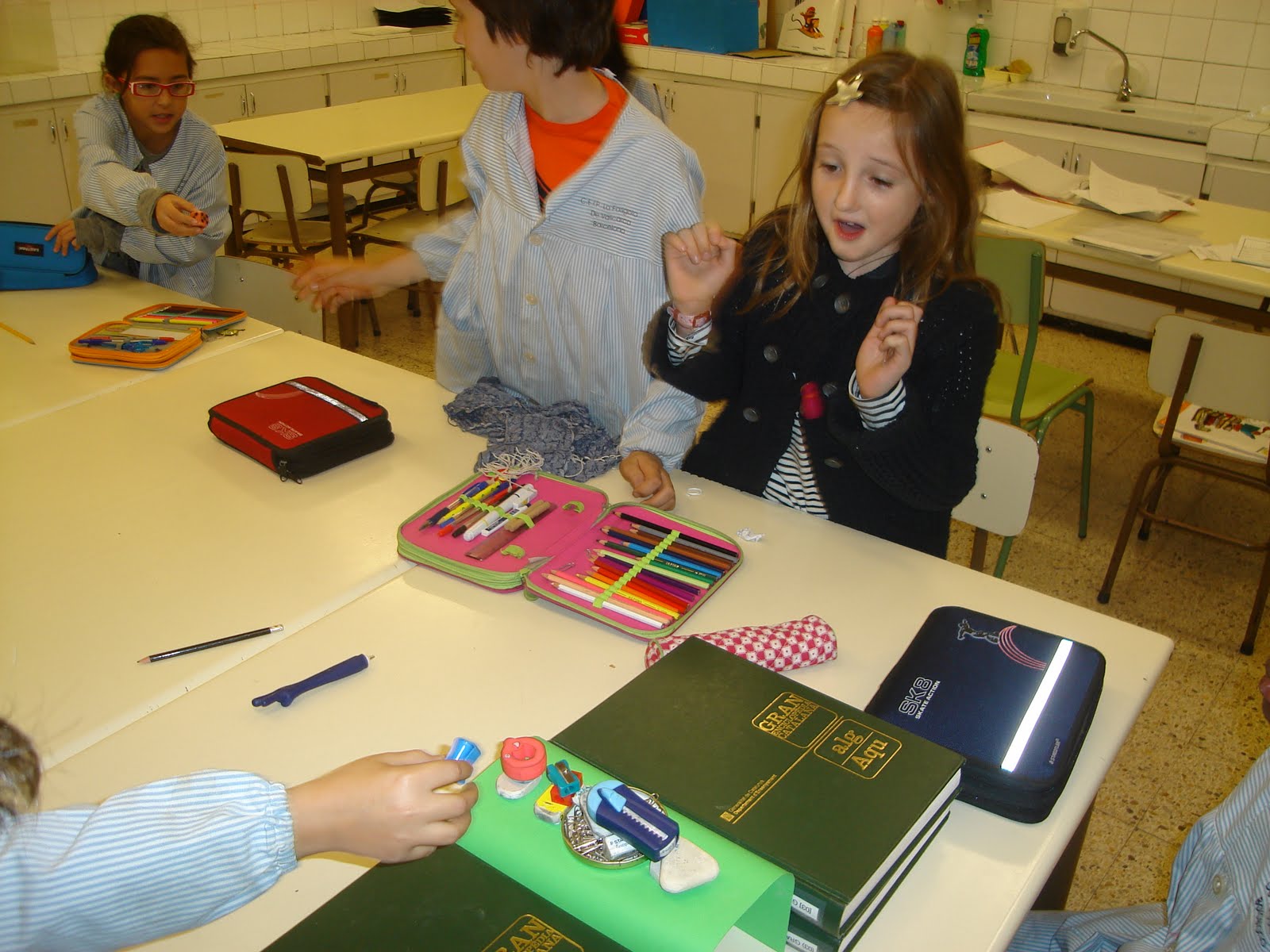
MATERIALS:
4 thick books
1 piece of cardboard
paper clips
rubbers
INSTRUCTIONS:
Put the books in two piles about 15 cm apart.
Lay the piece of the cardboard on the books.
Put paper clips on the cardboard. Count them. The "bridge" starts to sag.
Finally the bridge collapses.
Now make another bridge, but bend the piece of cardboard into an arch between the books.
Put paper clips and rubbers until it collapses.
This bridge is stronger than the first one.
WHY?
The first bridge collapses before because it is flat and it has to take all the weight.
In the second bridge the weight goes to the sides and it is shared by the books, so the card can support more weight.
WHAT DO YOU THINK ABOUT IT? WRITE YOUR COMMENTS.
dimecres, 6 d’octubre del 2010
Jumping egg


MATERIALS:
Two glasses
Two eggs
Vinegar
Water
INSTRUCTIONS:
- Fill a glass with water and put one egg into it.
- Fill the second glass with vinegar and put another egg in.
- Wait three or four days.
- The egg in vinegar hasn't got a shell. It's bigger and darker than the egg in water.
WHY:
Vinegar is an acid and dissolves the calcium in the eggshell. It is calcium that makes the shell hard. A thin flexible membrane just under the shell still holds the egg's shape.
Water does nothing to the eggshell.
Subscriure's a:
Missatges (Atom)